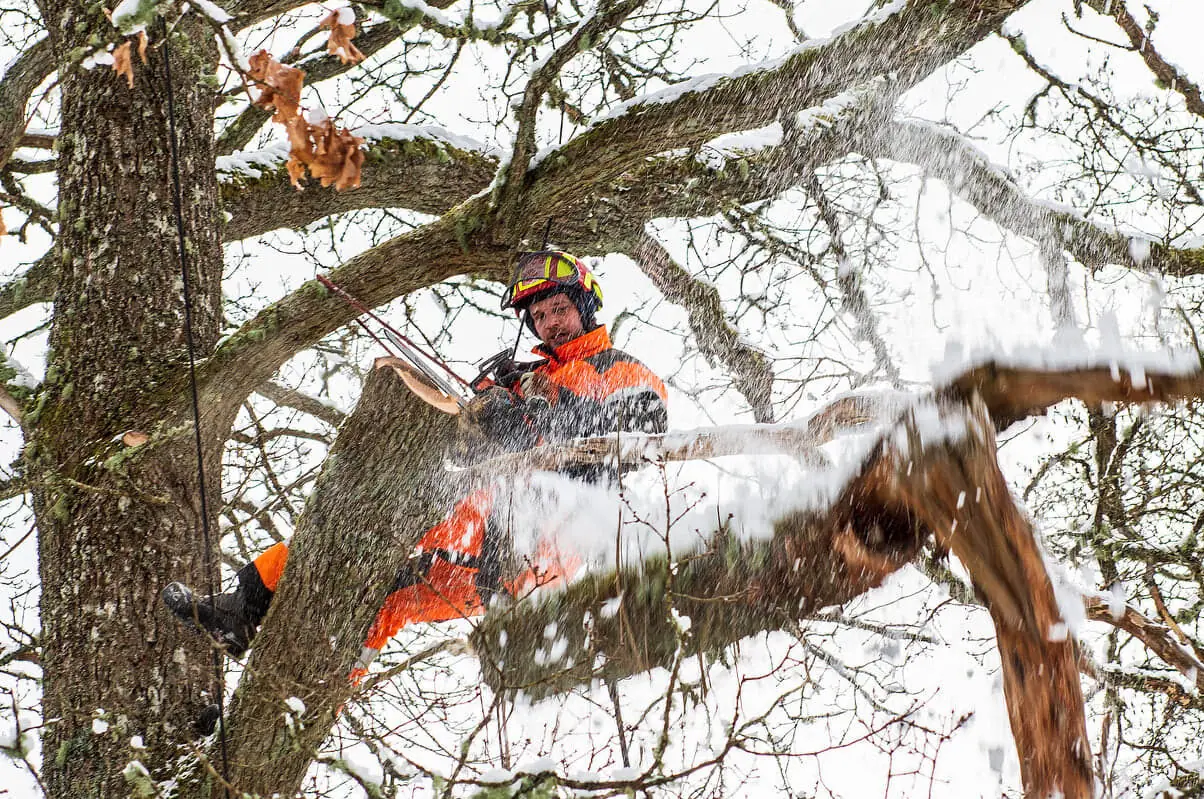
Tree pruning that the tree benefits from
Pruning is the arborist's most common task and the one that demands the most knowledge. The wrong cut at the wrong time gives rot, water shoots and a tree that loses its shape.
The right pruning removes what is dead, weak or in the way, lets light and air into the crown and keeps the tree safe for many years to come.
Different pruning for different needs
Maintenance pruning removes dead, damaged and crossing branches and is what most trees need every few years. Crown reduction reduces the size of the crown when the tree has outgrown its site, without topping it.
Safety pruning removes branches that hang over roofs, roads or play areas. Crown lifting removes the lowest branches so that you can walk, drive or see under the tree.
Fruit trees are pruned to bear fruit and stay healthy, and old trees that are valuable in themselves can be veteranised, that is, pruned so that they remain standing safely even with damage and cavities.
One example is an old oak in Växjö that was allowed to stay.
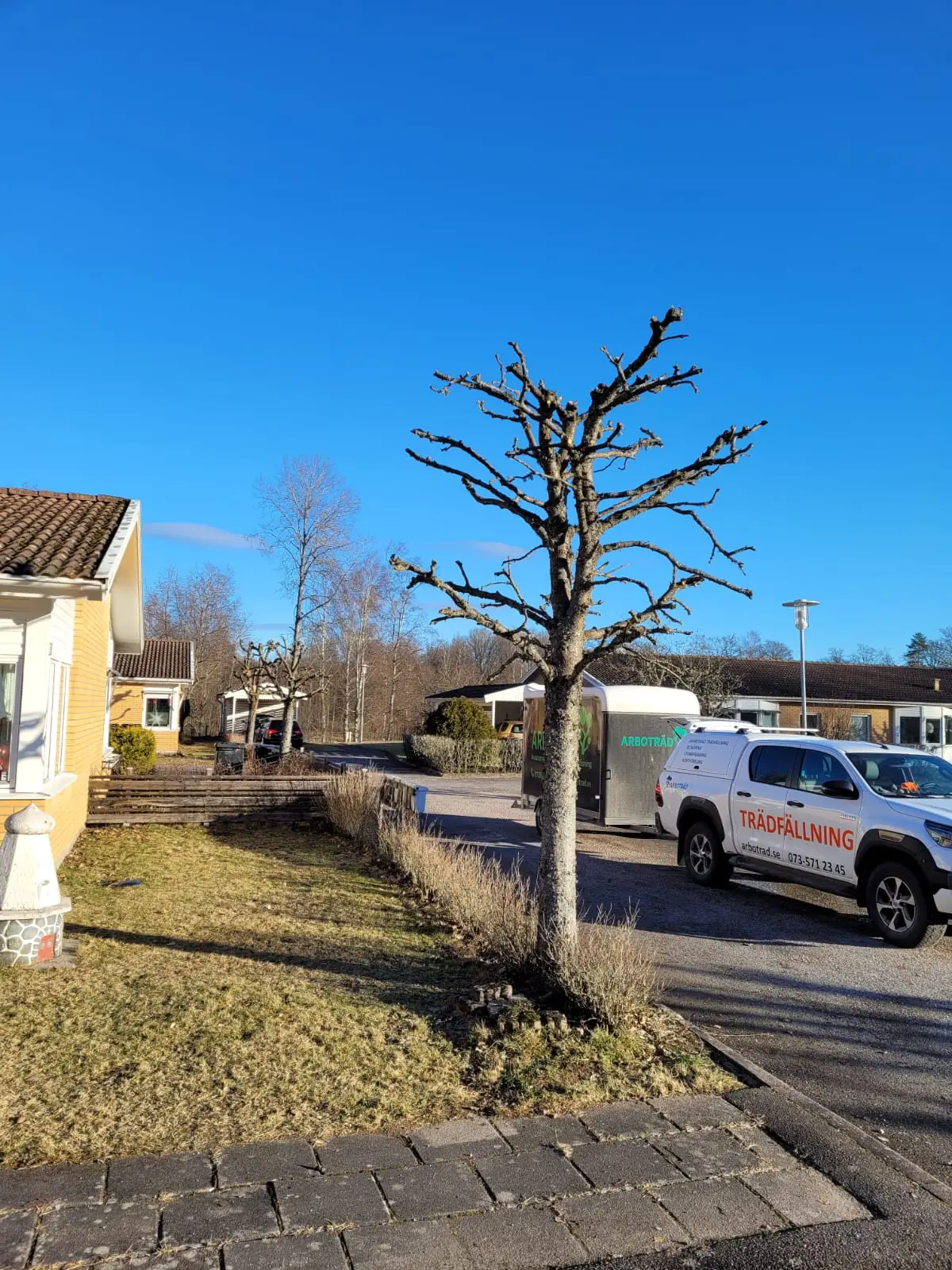
The surgeons of the garden
We like to describe ourselves as the surgeons of the garden, because pruning combines biological knowledge with practical skill.
The cut is made where the tree can callus over it, never in the middle of a branch, and never more than the tree can tolerate at one time.
That is why we do not top trees: a topped tree responds with dense, weak shoots that become a bigger problem within a few years.
The right time of year
Most deciduous trees are best pruned from high summer to early autumn, when the tree has the strength to heal the cut, or during winter when it is dormant.
Stone fruit trees such as cherry and plum are pruned in summer. Birch, maple and walnut bleed heavily in spring and are left alone then. We tell you what suits your tree.
Questions about tree pruning
Can you make my tree lower?
Yes, through crown reduction: the crown is reduced in all directions with cuts at side branches, so that the tree keeps its shape. We do not top trees, as that gives weak shoots and rot.
How often does a tree need pruning?
A mature garden tree often manages with maintenance pruning every three to five years. Fruit trees are pruned more often, and young trees are shaped during the first years. At the home visit you get a proposal for your particular trees.
Do you prune fruit trees?
Yes, both apple and pear trees and stone fruit such as cherry and plum. We take into account when each variety tolerates pruning.
What else we do
The jobs often go together: the tree comes down, the stump is ground and the brash leaves with us the same day.
We come out and look at the tree
The home visit costs nothing and you get a fixed price with the RUT tax deduction already applied. We normally reply within one working day.